July 9 2026 -
Green Street News Q+A: Don O’Rorke on the keys to building long-term success in property development
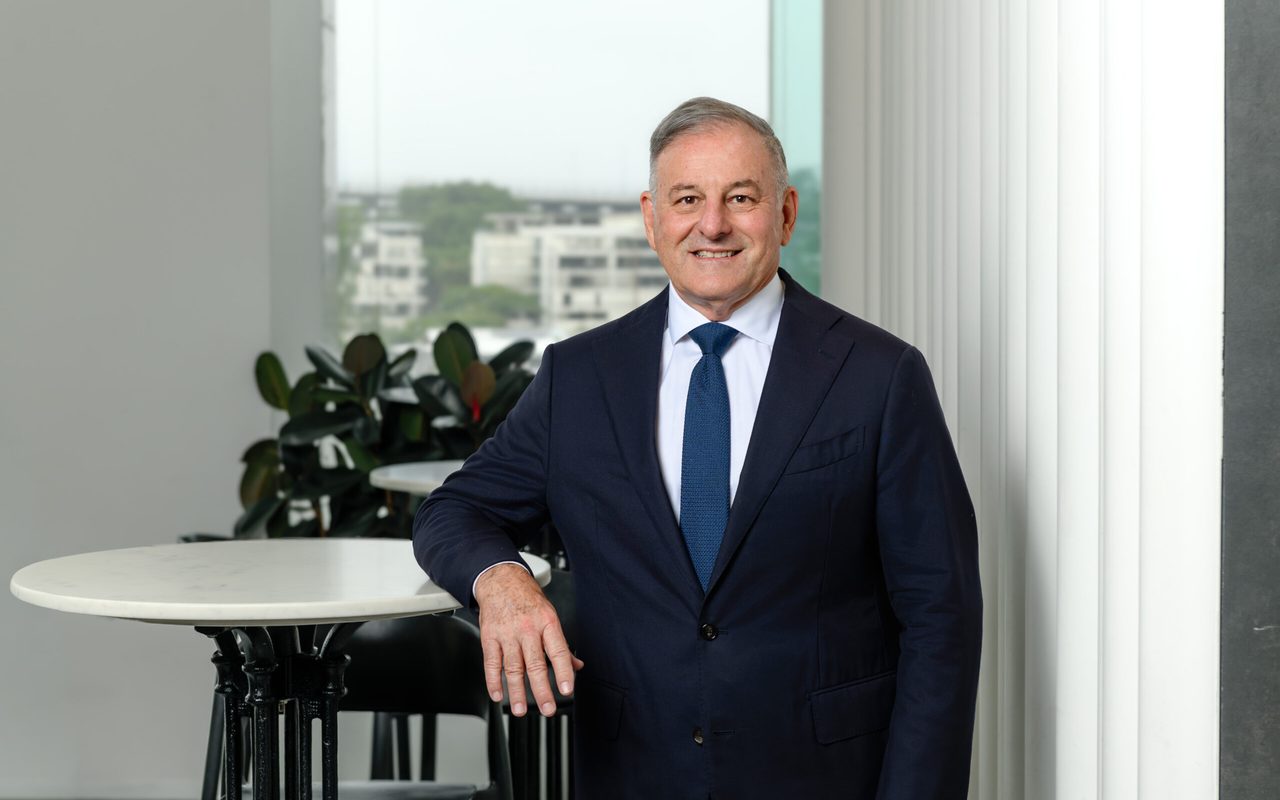
Originally published by Larry Schlesinger at Green Street News via: https://greenstreetnews.com/article/qa-don-ororke-on-the-keys-to-building-long-term-success-in-property-development/
O’Rorke says he has another decade in property development, and a $4bn project pipeline to work through.
By his own reckoning, Don O’Rorke should by now be thinking about slowing down and stepping back – he told the AFR in 2019 he had another decade in him. But instead, one of the legends of property development in Australia is forging ahead with a series of luxury apartment, land subdivision, office and retail projects in Brisbane and northern NSW being undertaken by Consolidated Properties Group. Combined, they have an end value of $4bn.
“There’s always another decade to go. I’m 65. I’m healthy, I enjoy what I do, and I still have something to contribute,” O’Rorke told Green Street News.
O’Rorke has lost none of his Midas touch. This year, CPG sold out a $450m apartment tower in Toowong, and buyers are lining up for a $600m neighbourhood mall portfolio CPG is selling alongside co-investor CVS Lane.
This year, he’s doubled down on Brisbane’s downsizer market, launching a $1bn-plus luxury apartment tower in Newstead on the Brisbane River and another luxury tower in Yeerongpilly in Brisbane’s inner south. Also in the works is an office tower in Fortitude Valley and a string of neighbourhood shopping centres.
O’Rorke’s passion for creating and delivering landmark projects coincides with a decade that includes his hometown hosting the 2032 Olympics, an event he believes will further cement Brisbane’s status as a major destination for global capital.
“You sort of rattle off the sequence of [host cities like] Tokyo, Paris, Los Angeles, Brisbane. All of a sudden, we’re in that sentence.”
In a wide-ranging interview, O’Rorke looked back at his stellar career, his long-term collaboration with builder Scott Hutchinson, the key strategies that have shaped the success of CPG over more than four decades, and how he intends to grasp the opportunities that lie ahead over the next 10 years.
Going back to the start of your career, how did you get into property development and establish CPG?
My first job after completing a business degree at QUT was at what is now CBRE in Brisbane. I leased shops and offices in the CBD and near city. While I was at CBRE, five of us got together and put $5,000 each on our credit cards to create a little pot of money. We optioned a site up at Lutwyche [in the Northern suburbs of Brisbane] and through our CBRE connections, we knew that Westpac wanted a new small office.
So, we coupled the Westpac idea with the site and our $25,000 plot of seed capital and did our first small project, which was a two-story office building that is now over 40 years old and is the head office [of real estate firm] Coronis. So, my entry into property development was via agency and by understanding what the occupant wanted. And in that case, the occupant was Westpac.
I figured out that I didn’t actually know anything [about development] after the first project, so I left CBRE and I worked for a developer by the name of Don Cunnington. And while I was there for 12 months, that group of five using the Consolidated Properties name did our second project, which was basically a rerun of that first project, except this time it was at Coorparoo [in inner Brisbane] and the tenant was Commonwealth Bank.
After my one year [working for Don Cunnington] and aged 23, I figured I knew everything. So, I left to pursue the CPG dream full time. Very quickly, I bought out three of the partners, and then two of us, Steve Tyson and myself, remained in partnership for quite a few years. About 15 years ago, I bought out Steve’s shares. I’ve been the sole owner of CPG since then.
What were the big lessons you learnt from doing these two projects and your time at CBRE?
What I learned when I was at CBRE is that the occupant of the property is the most important person in the transaction. I’ve taken that core belief and used it all through my working career. Whether that occupant is Coles or Woolworths in our shopping centre business, whether it’s the federal government in our office business, whether it’s a young couple starting out renting a unit from us, or whether it’s a wealthy baby boomer retiring into a large apartment, all of those people have needs. If we satisfy their property needs, then we can build a transaction. And that’s been our core operating philosophy really from the very first project till now.
So, repeat business is a huge driver of your workbook and your projects?
That’s right. In our shopping centre business, our main customers are Coles and Woolworths, and we’ve probably done 35 neighbourhood centres over the years [with them]. I think that probably puts us at the top of the list in Australia for the number of projects developed. I don’t think anyone has done any more than us. And that really underwrites that philosophy of repeat business and looking after the occupant.
How has your long collaboration with Scott Hutchinson and Hutchinson Builders shaped the success of your business and his?
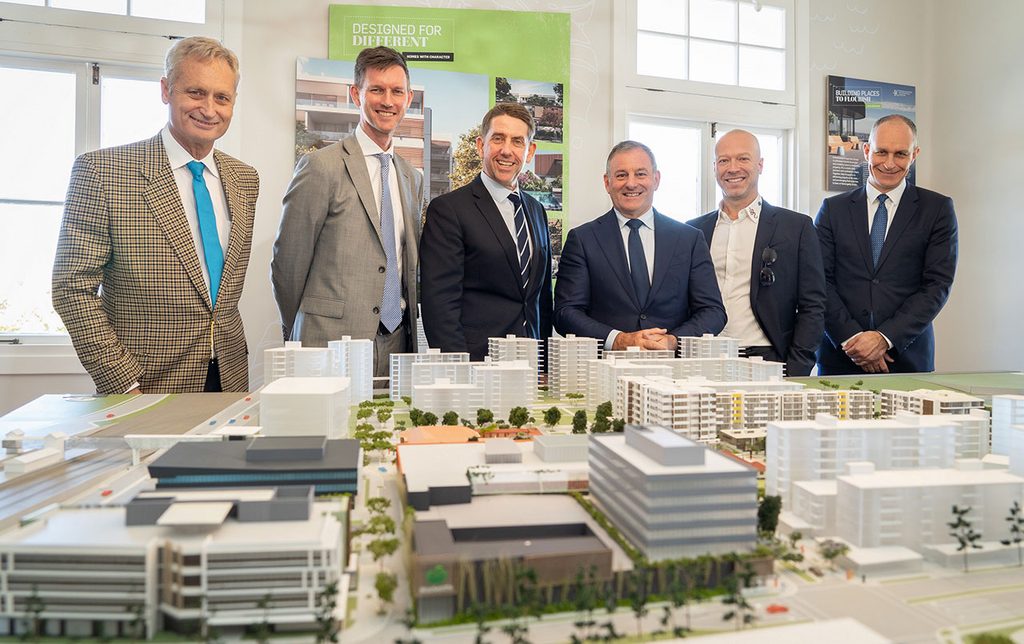
Scott and I met in grade nine at Brisbane Boys College, and we’ve been really close friends ever since then. For the first part of my career, CPG used other builders, but for 35 years, Hutchinson has been our exclusive builder. So, we have a really simple philosophy. We’re quite happy for Scott to make a profit when we pay a dollar for a dollar’s worth of work, not 90c or $1.10.
And so long as he’s in the market in terms of the price, we don’t need to go anywhere else. We also look after each other. So, if he has a problem on a job, we’ll step in, provide more capital if that’s what’s required… and similarly, he looks after us as well too. He assists sometimes with seed capital, he provides underwrites for the delivery of projects, he comes back and fixes defects well after the defects period’s over.
I don’t want to be a builder, he doesn’t want to be a developer, so we’re a really good fit together.
If you apply that in a wider sense, it’s all about listening to people, looking after them, believing that the relationship is more than one transaction. That’s our core philosophy.
How do you deal with disagreements?
I just pick up the phone and go and see him. It might sound a bit odd, but Scott and I really just haven’t [ever] had a cross word. We treat each other with respect, and if there are issues, they will be at a project level, and we just have a talk and sort it out. So, I think the simple principle is pick up the phone if there’s a problem. … Don’t send the dreaded email with a hundred CCs on it.
I understand avoiding costly legal battles is another core belief you have?
One of the things I have on my desk is a framed check for $200,000 and a little plaque that says: “$600,000 dispute, nine years in court, $5m in legals, a $200,000 settlement.” That was a battle we had with Concrete Constructions, which at that stage was the largest contractor in the country. They had completed a landmark project for us, the Commonwealth Law courts, which was a $130m project back in the 1980s.
We should have been long-term partners with them, but they got greedy. We had to slug it out in court, and the futility of it was best evidenced by those stats. They went into receivership shortly afterwards, and it was at that time I switched over to Scott [Hutchinson]. Scott said, “You don’t need that sort of bloody admin in your life. Come and do some stuff with us, and you definitely won’t have a second plaque with Hutchies written on it, I promise you.”
You’ve kicked off a bunch of new projects this year. What is the market like at the moment for developers?
At the moment, the macro [environment] is really good. Our workbook now is exclusively in SEQ, including [just over the border] in Northern NSW. It’s a high growth region, so demand is being driven by population growth. It’s also being driven by demographic shifts. The best evidence of that are the baby boomers selling their big expensive-to-maintain homes and looking for downsizer options. So those two big trends mean there’s plenty of demand for the product we produce.
Another big macro thing is that people moving to SEQ can get a job and vacancies are low in each of the product categories we’re in. So, there’s very low vacancy for residential rentals and for CBD offices and near city offices. And the ratio of shopping centres to population is the lowest in the country. So basically, we’re full in terms of all the products and people are coming here, which just creates demand for further products. For example, every 10,000 people coming here is another shopping centre. So that’s the best example of population growth pushing demand.
In terms of the micro, it’s a really difficult situation. There’s inflation and there’s turmoil with the rewrite of the taxation system. So it’s as bumpy as it’s ever been. But our view is that we need to look through the cycle and believe the macro because the macro will deliver us buyers for our apartments, tenants for our offices and opportunities to create new shopping centres.
Luxury residential development is your main focus now. What do you have to do now to deliver a successful project?
We’ve just finished the Monarch project at Toowong. That’s worth $450m, and we are completely out of that now. The last apartment sold a couple of weeks ago, and that’s a good example of how we presented a product to the market. What we said was: firstly, we have the approvals. So this is before we start. We’ve got a DA; it’s not pie in the sky. We have the capital, and, in that instance, Qualitas, GIC and ADIA were the capital sources. So, we’ve got the money, we’ve got a well-capitalised and well-experienced builder in Hutchies, and we’ve got a beautiful building designed by John Wardle. So, you add those things up, and what that means is certainty and confidence for our buyers
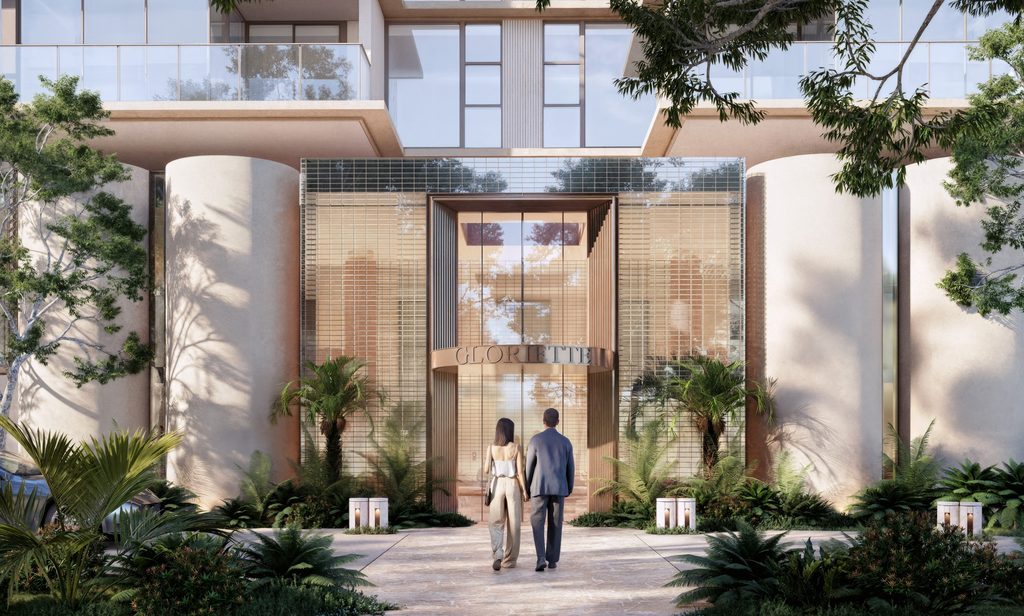
Our buyers know the project will be beautiful and they know it’ll happen. And that played out with Monarch. We finished early; we’re fully sold out. The revenues grew pretty dramatically across the construction period. So, all the buyers banked plenty of capital growth during construction. So, we’ve got 220 happy customers out there. We’re replicating that exact formula at Yeerongpilly Green with our Gloriette tower, which is a $500m project with 181 apartments, a great architect in Rothelowman, Hutchies is building it, and we’re actually under construction so people can see it’s going to happen.
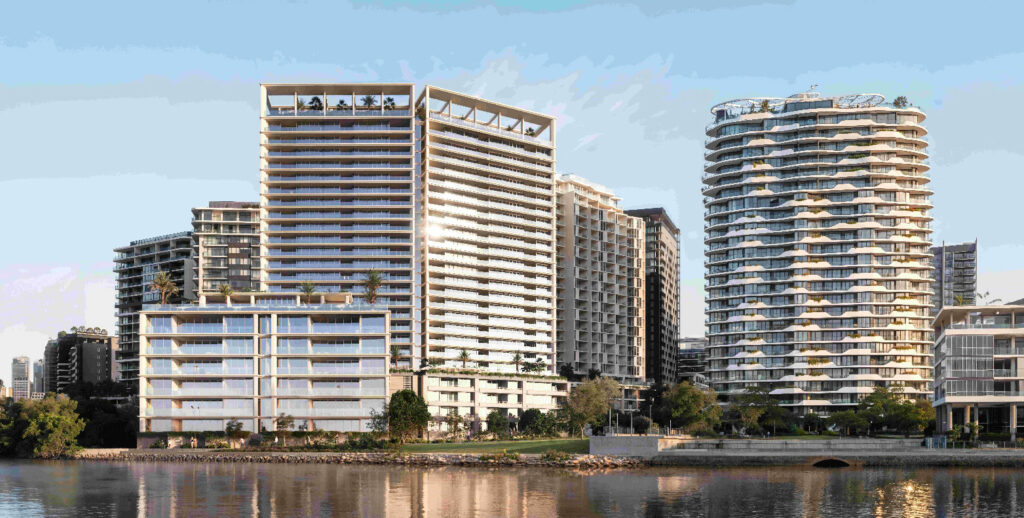
Yesterday we settled a site down at Newstead for Castile. It’s a bigger project. It’s north of a billion dollars in revenue, and it’s 240 apartments. Woods Bagot is the architect, and Hutchies is the builder. It’s got a DA. So, it’s that same quality and certainty story.
And you also have a big land subdivision project across the border. How is that progressing?
Years ago, we did Casuarina, which was essentially a new township on the beach in Northern NSW. We’re fortunate enough to be able to secure another 100ha site at Pottsville, and we’re going to create another town there called Caldera. It’ll comprise about 600 house lots and a village centre anchored by a Coles supermarket. But it’ll be a proper village, not just a supermarket. We’ve lodged for rezoning, and we’ll hopefully get that rezoning later this year. So, we’re in the approvals phase.
What is the market like for office and retail development?
What we’re finding in our office business is that market rents are catching up to economic rents. Up until recently, there was a big gap between what you could rent an office space for versus what you need to rent it to build a new office building, but that gap is closing.
Shopping centres, the gap is still pretty wide. The rent required for a new shopping centre is above what you can achieve in an existing shopping centre. And what that says is that existing shopping centres offer probably some of the best buying there is in the market because they are essentially half the price of a new shopping centre.
Does that mean that you can’t get a new shopping centre project to stack up?
It’s harder, but the tenants are saying we know that if we don’t protect our market share, our competitors will step in. So, they are stepping up to the challenge of paying higher rents, but that’s not a universal comment, and its early days in that conversation.
And what about a new office tower?
You can [make them stack up]. We will announce in the near future that we’ve leased the third office building in our collection in Fortitude Valley, and that was obviously at a rent that enabled new construction. So, you can make it stack up. Rents have risen pretty dramatically over the last couple of years because vacancies are much lower [in Brisbane than Sydney or Melbourne]. … Some precincts are well under 5%. So, we’ve got a really healthy office market here as measured by occupancy.
What impact do you think hosting the 2032 Olympic Games will have in terms of bringing investment capital to Brisbane?
It’s very hard to measure it empirically, but the intangible is all of a sudden, we are an Olympic city. So, you sort of rattle off the sequence of [host cities like] Tokyo, Paris, Los Angeles, Brisbane. All of a sudden, we’re in that sentence. What that means is the awareness of Brisbane is dramatically increasing.
And for our business specifically, the awareness in those deep capital markets like in the UAE through Singapore and through Europe and Frankfurt and the likes, they’re all of a sudden aware of what Brisbane is and that the Olympics are coming.
So very specifically, we’ve done deals with DWS, which is [the global asset management arm of] Deutsche Bank based in Frankfurt. We’ve done deals with GIC, which is in Singapore, and ADIA, which is in the UAE. So, for those countries and those sovereign wealth funds and fund managers, all of a sudden Brisbane’s on their radar.
What does the CPG business look like going forward?
We are essentially a developer. At the moment, our residential book is the two new apartment buildings and Caldera, and there’s probably around $2.5bn in that portfolio. In our shopping centre business, we at this moment in time still own those six centres [up for sale], but we probably will be the former owner of those in the next month or so. And we’ve got three new centres which will form the core of the next portfolio, which will take us another 10 years given what the first two took us to put together.
And then in our office portfolio, we’re about to start on that $300m office project [in Fortitude Valley], which is pre-committed. And we would look to add another office project into that portfolio once we find an opportunity to do so. And that then pretty well wraps up our workbook, which I think is about $4bn.
Do you see any opportunities in other emerging asset classes like BTR, land lease and student housing?
We’ll just stick to the core groups, those three silos [of residential, office and retail]. Over the years, we’ve done retirement villages, car parks; we’ve done resorts in Japan. We’ve had a go at everything over the years. But as I get older, I’m happy to be SE Queensland-focused and narrow it down to those [sectors]. The way we describe ourselves now is we produce institutional-grade residential, commercial and retail assets. So, our space is the high-quality top end of the market now.
Published 8 July 2026 by Larry Schlesinger